
Ecoembes recycling Household packaging
Ecoembes recycling Household packaging
Recycling
The habit of separating waste for recycling has steadily grown in recent years and is now the most widespread environmental action in our country.
In 2025
Ecoembes recycled 1,494,842
tons of household packaging
made of plastic, metal, wood, paper, and cardboard, including cartons
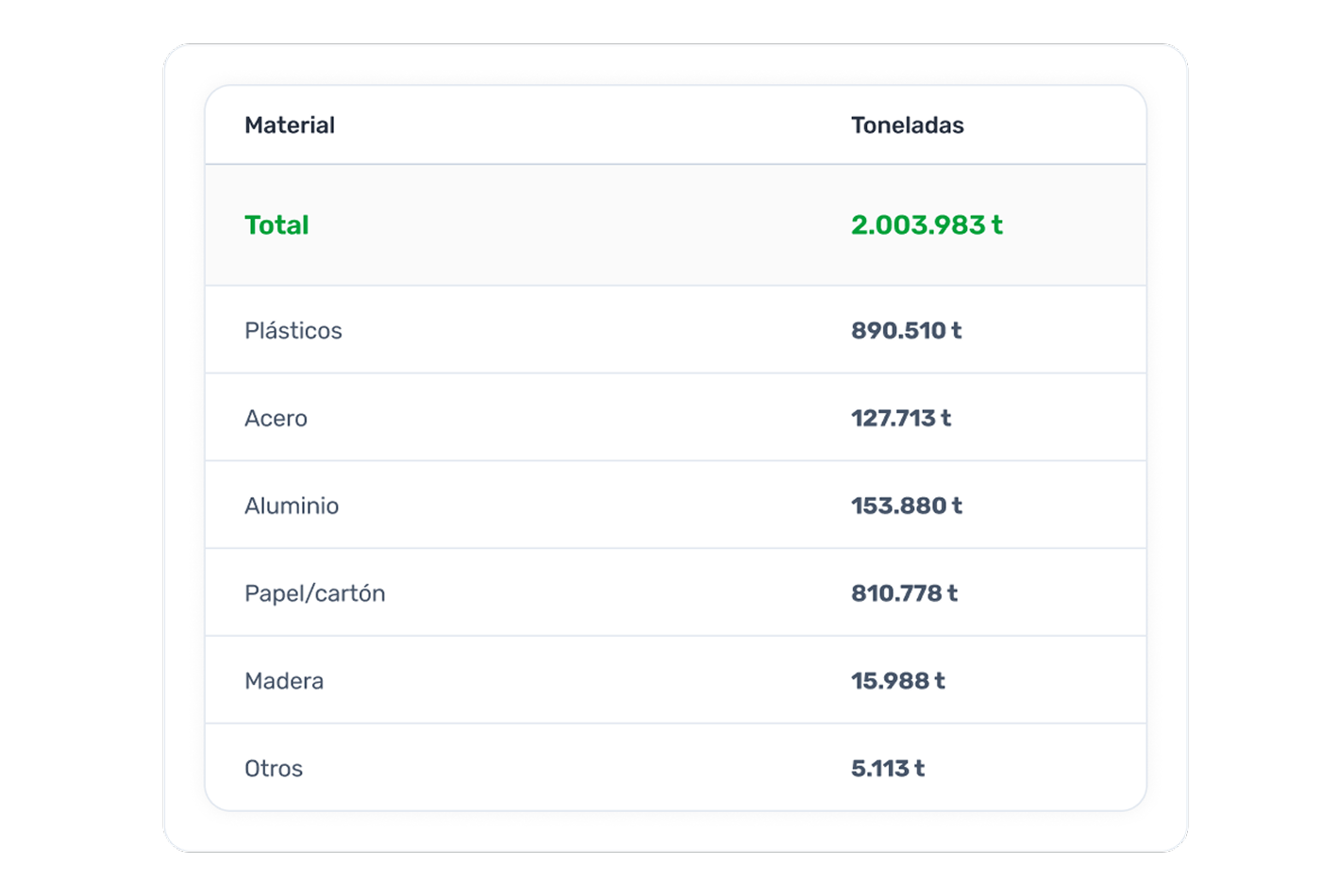
Ecoembes' clients placed 2,003,983 tons of household packaging made of plastic, metal, wood, paper, and cardboard, including cartons, on the market. Thanks to collaboration by companies, municipalities, and citizens all across Spain, 1,494,842 tons of this volume were ultimately recycled, representing a recycling rate of 74.6%.
These figures, which Ecoembes reports to the Ministry for the Ecological Transition and the Demographic Challenge, are based on information provided by Spain's Autonomous Communities for municipal collections, and by authorized private waste managers for private collections, in proportion to their market share. The Ministry will be responsible for incorporating these figures into the overall calculation of the national rate, for which Royal Decree 1055/2022 sets a target of 65% by 2025.
The following table provides a breakdown by material. The 2025 recycling rate is calculated based on Ecoembes' share of responsibility, while the previous year's rate is calculated based on 100% of the market.
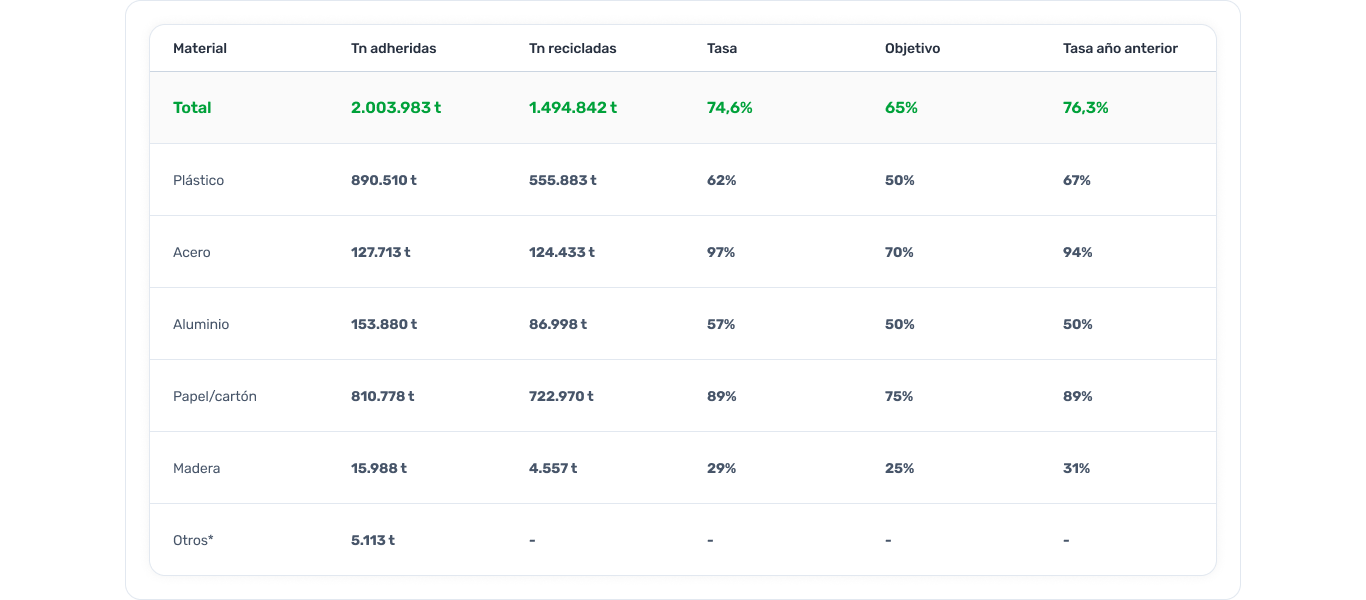
*Consisting of minor materials, like ceramics or textiles, for which no specific recycling targets exist.
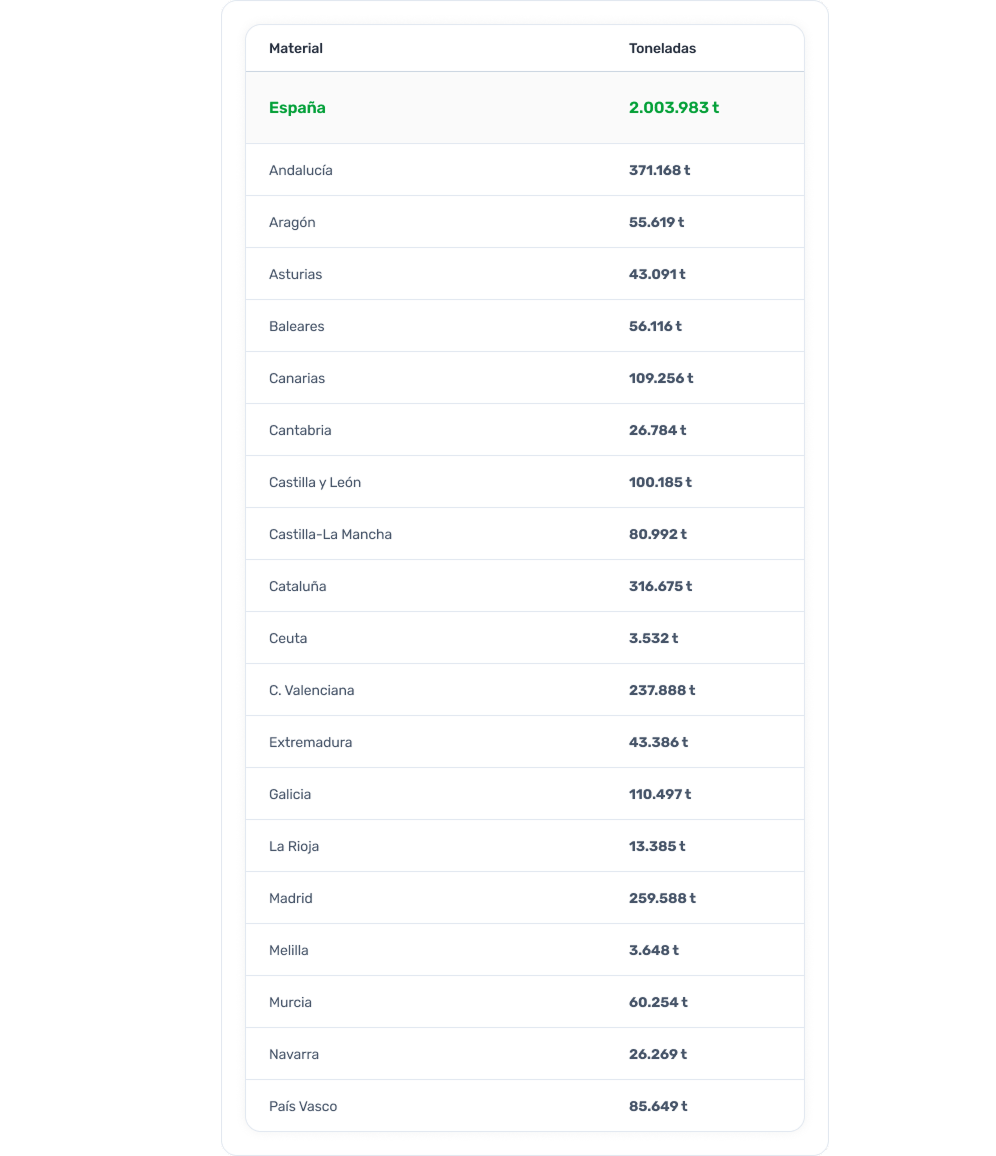
And here are the figures at the regional level:
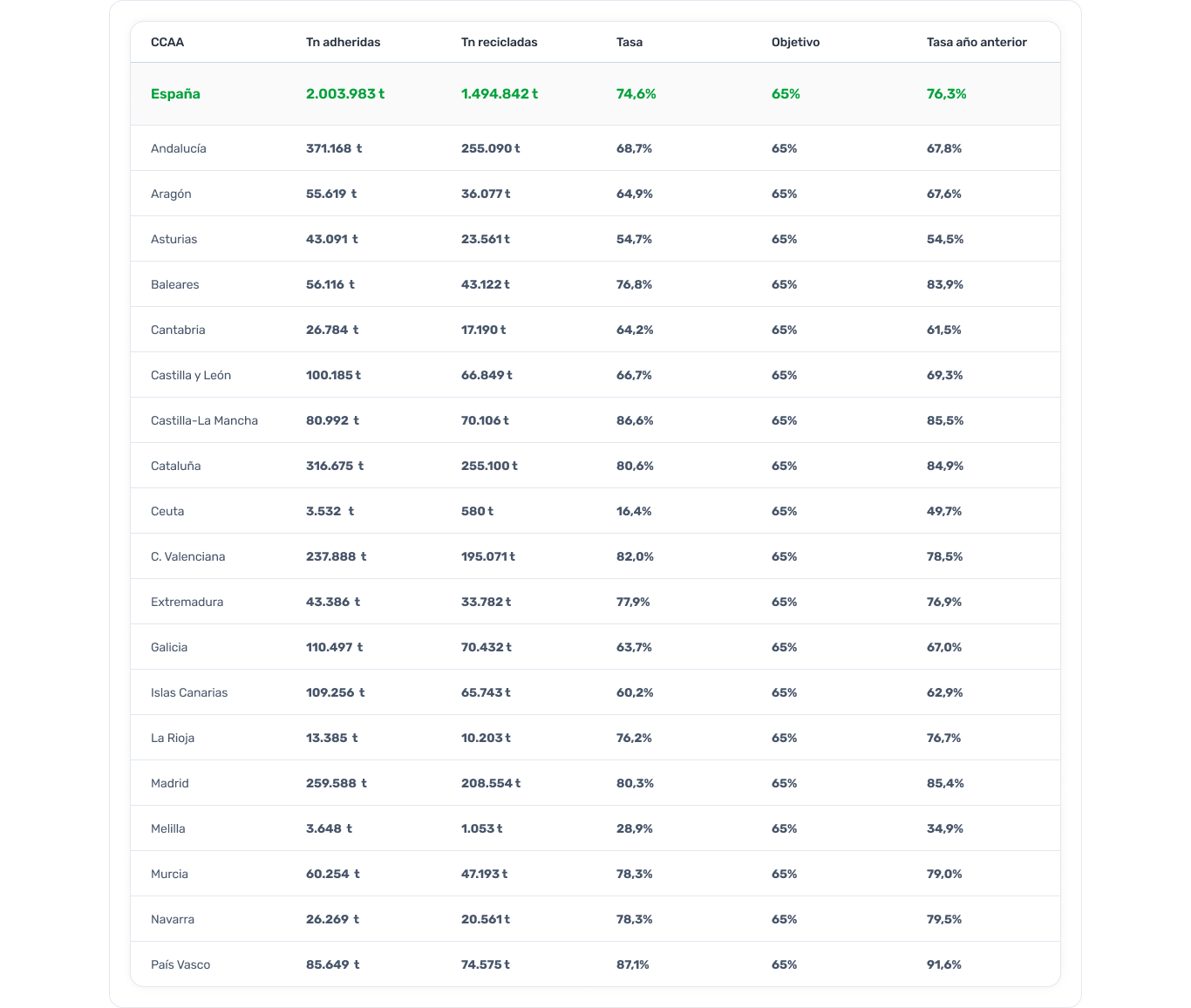
These figures come from two main sources:
-
Autonomous Communities (administrative regions) for separate collection through municipal services.
-
Authorized private operators for private separate collection.
This information on packaging waste, as well as that on other municipal waste, is subject to constant traceability to ensure its quality and accuracy.
Separate collection
A total of 1,319,118 tons were collected separately; that is, via the yellow and blue bins placed on streets by municipalities, as well as through collection in areas with high foot traffic, which falls under the private sector.
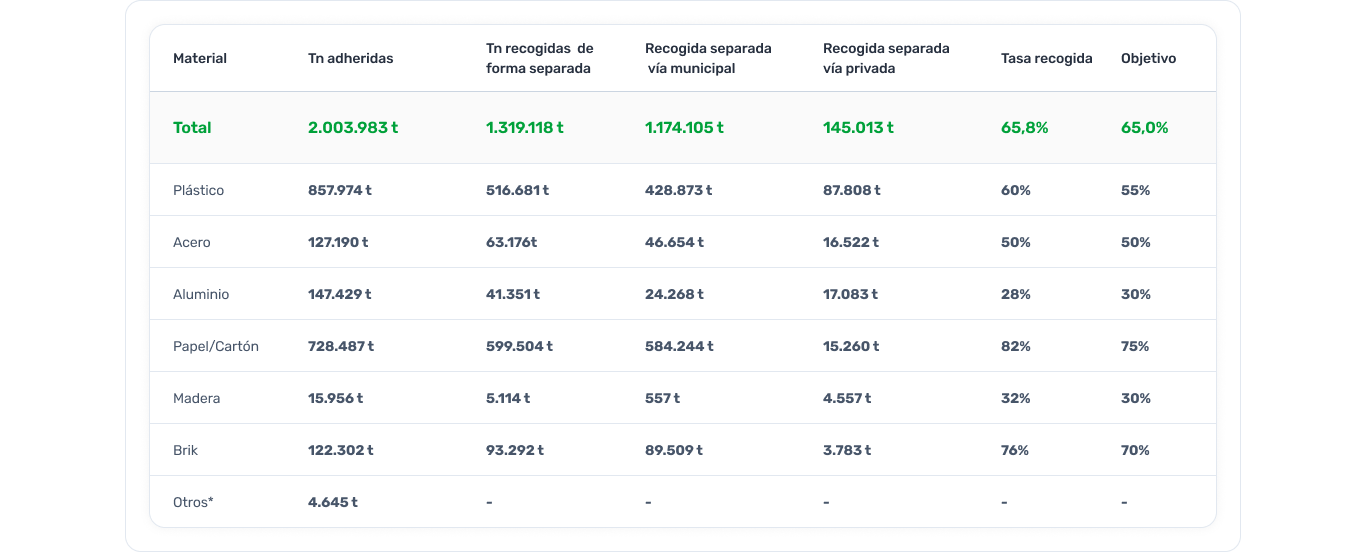
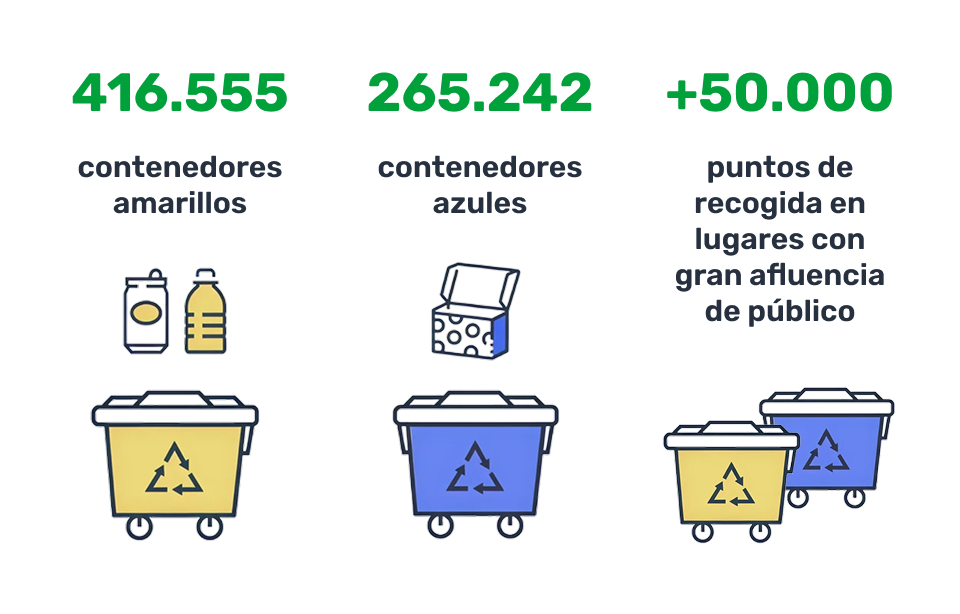
In our country, the separate collection of household packaging is carried out through yellow bins (for plastic, metal, and wood packaging, including cartons) and blue ones (for paper and cardboard) that one can find on the street in their neighborhood. The vast majority of the Spanish population has these bins less than 100 meters from their homes.
Membership
In 2025, 26,073 Ecoembes clients placed 2,003,983 tons of household packaging, including cartons, made of plastic, metal, cardboard, wood and paper, on the market.
Tons declared, by material
Estimated tons declared, by Autonomous Community (administrative region)
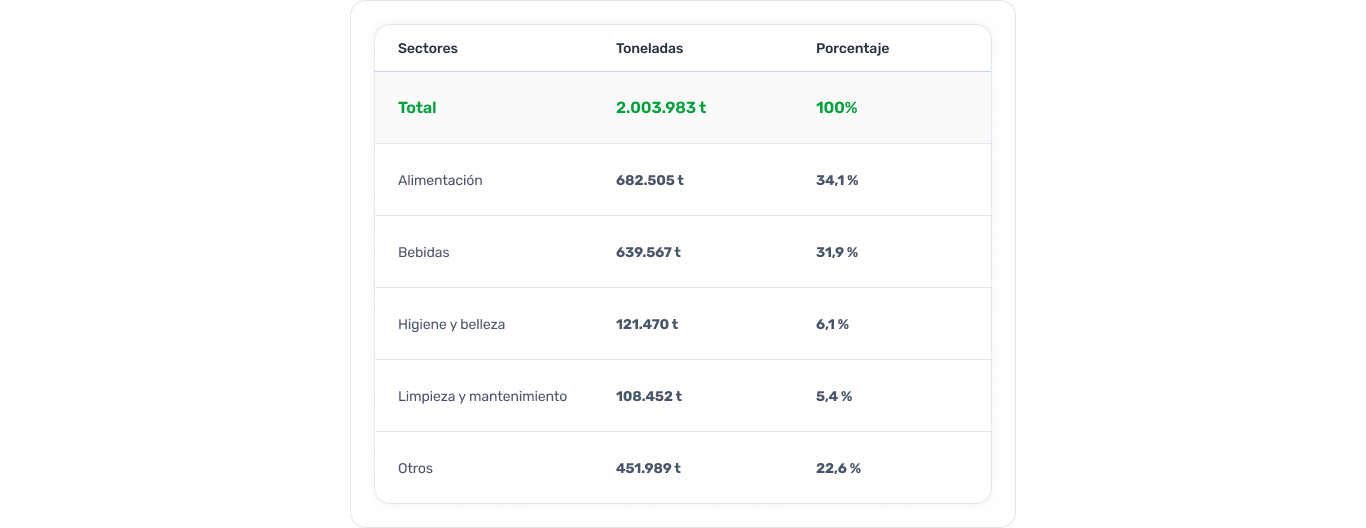
Estimated tons declared, by sector
Official sources for information about managing household packaging
From beginning to end, the recycling cycle is a closely controlled operation.
Due to information provided on the ground by the town halls and waste managers authorised by the Autonomous Communities, this monitoring enables us to have a thorough understanding of the situation of all packaging from the time it is recovered from the bins to the time it is converted back into raw material.
All the traceability checks that support this regular activity are completed by auditing firms outside Ecoembes, which ensures that the waste is converted into a new resource.
Here, we describe the controls that are implemented throughout the recycling cycle and who is responsible for them.
European Commision (Eurostat)
-
Packaging recycling (including household, commercial, and industrial) 2023
-
Recovery of packaging (including household, commercial, and industrial) 2023
-
Total recycled urban waste 2023
-
Packaging waste generation 2023 (including household, commercial, and industrial)
-
Waste generation in 2023
*The packaging management data offered by the Ministry correspond to commercial, industrial and domestic. The scope of action of Ecoembes is only domestic packaging.
*The calculation of these data is based on the new method approved by the EU in 2019, according to which the measurement point to calculate the recycled material will be right at the entrance of the industrial operation of transformation of the waste in which the waste of containers are ready for use as a product-material-substance. As these 2020 data are the first to be calculated according to this new, more demanding method, there is a break in the historical series.